
WordPress Can Run in the Cloud, but the Setup Matters
WordPress powers a huge share of the websites on the internet, and it runs happily on many kinds of hosting. Cloud hosting is one option that people often hear about, usually with promises of speed, scale, and reliability. It can deliver all of that, but only when the setup is done with care.
This overview explains what cloud WordPress hosting means in practice, who it suits, and what to check before you move a site onto a cloud platform.
What Cloud WordPress Hosting Actually Means
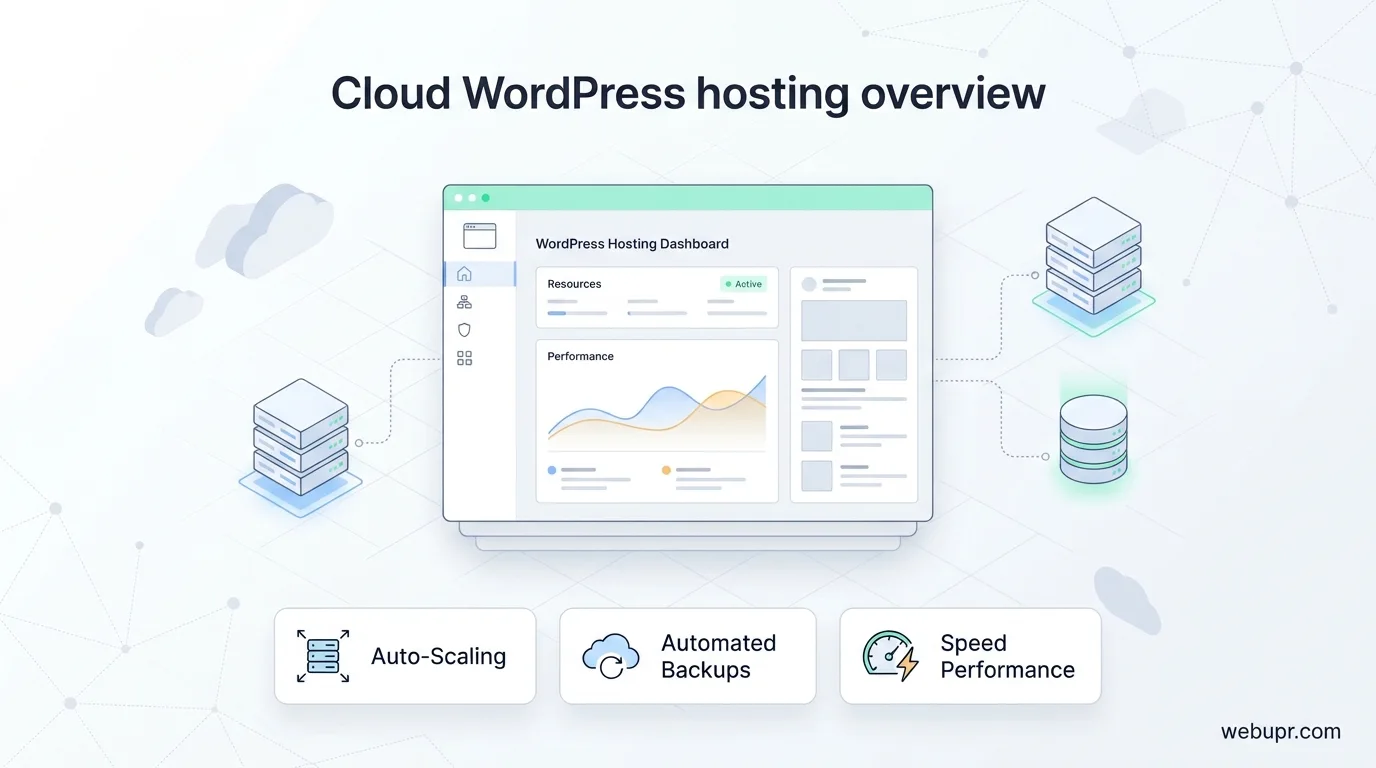
Traditionally, a WordPress site lives on a single server, often shared with many other sites. Cloud WordPress hosting spreads the site across a network of resources that can be added or reduced as demand changes. The WordPress files, the database, and the uploaded media can each run on services designed for that job.
The practical result is that the site can handle busy periods more gracefully. Extra capacity can be added when traffic rises, and it can be scaled back when things quieten down.
Managed Cloud Versus Do It Yourself
There are two broad routes. A managed cloud WordPress service handles the server layer, updates to the core platform, and often backups and security rules. You focus on the site itself. This is the simpler route and suits most businesses.
The do it yourself route means you rent cloud infrastructure and set up WordPress, the web server, the database, and the backups yourself. It gives you full control, but it also makes you responsible for every update, security patch, and failure. Unless someone on your team enjoys server work, the managed route is usually the better choice.
Who Cloud WordPress Hosting Suits
Cloud hosting makes most sense for sites with unpredictable traffic, such as a shop with seasonal peaks, a media site that sometimes goes viral, or a business that expects rapid growth. It also suits agencies running many client sites who want consistent performance and clear backups.
A small brochure site with steady, modest traffic often does not need cloud hosting. A well chosen shared plan can serve it perfectly well at a lower cost. Our article on best hosting for small websites explains how to tell when a simpler plan is enough.
Performance and Caching
Cloud WordPress setups often pair the site with caching layers, content delivery networks, and optimised databases. Done well, this makes pages load quickly for visitors in different countries and keeps the site responsive during busy spells.
Caching needs care, though. If a plugin or theme does not play well with the cache, visitors may see outdated content or broken pages. Test every change, and clear the cache after updates.
Backups and Recovery
Backups are one of the most important parts of any WordPress setup, and cloud platforms make them easier to manage. Check how often backups run, where they are stored, how long they are kept, and how you restore a single file or the whole site. Test a restore before you need it, because a backup you have never tried to restore is a hope rather than a plan.
Security Is Shared
The cloud provider looks after the infrastructure, but the WordPress site itself is still your responsibility. Keep the core software, themes, and plugins updated. Remove anything you no longer use. Use strong passwords and two factor authentication for admin accounts, and limit who has access.
A neat, well maintained site is much harder to break into than a cluttered one, whatever the hosting setup.
Costs Can Be Hard to Predict
Cloud pricing often depends on usage, so the bill can vary from month to month. A quiet month may cost little, while a busy one costs more. Set budget alerts, review the bill regularly, and compare the expected monthly total against a fixed managed plan before you commit.
If you are comparing with traditional options, our guide on shared hosting vs cloud hosting walks through the trade-offs in more detail.
Migrating an Existing Site
Moving a WordPress site to a cloud platform is a project in its own right. Back up everything first, including the database and uploads. Set up the new environment and test the site on a temporary address. Check forms, checkout pages, and any integrations. Only then update the domain settings, and keep the old host running until you are sure the new setup works.
If you are new to WordPress, our guide on how to install WordPress on cPanel is a useful reference for the basics before you take on a cloud setup.
Choosing a Cloud WordPress Setup
Start with your traffic pattern and your team. If traffic is steady and modest, a simple plan may be enough. If traffic is spiky or growing quickly, cloud hosting can handle it. If nobody on the team wants to manage servers, choose a managed service rather than building everything yourself.
Compare backups, support, security features, and renewal prices across two or three providers. Test the speed and the control panel before you commit.
A Simple Checklist
Confirm whether you need managed or self managed hosting. Check traffic patterns and plan for peaks. Test caching with your theme and plugins. Confirm backups and practise a restore. Set up security basics such as updates and two factor authentication. Set a budget alert for usage based pricing. Test the migration on a temporary address before switching the domain.
The Bottom Line
Cloud WordPress hosting can deliver speed, scale, and resilience, but it works best when the setup is planned carefully. Choose managed if you want simplicity, check backups and costs closely, and keep the site itself tidy and updated. The cloud does the heavy lifting, but the site still needs looking after.
For official WordPress guidance and updates, visit the official WordPress website.