Why Pantheon Costs So Much (And Whether That Makes Sense)
Pantheon starts at forty quid a month. For a single website. That is not budget hosting. That is not middle-of-the-road hosting. That is premium hosting with a premium price tag.
For context, you can get a decent shared hosting plan from Hostinger or Namecheap for two to five quid a month. Pantheon is eight to ten times that cost.
So what are you actually getting?
What Pantheon Actually Is
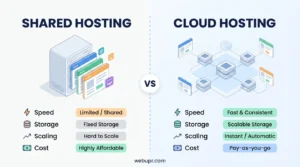
Pantheon is not shared hosting. You do not rent server space alongside hundreds of other websites. Pantheon is a managed WordPress platform built specifically for developers and agencies.
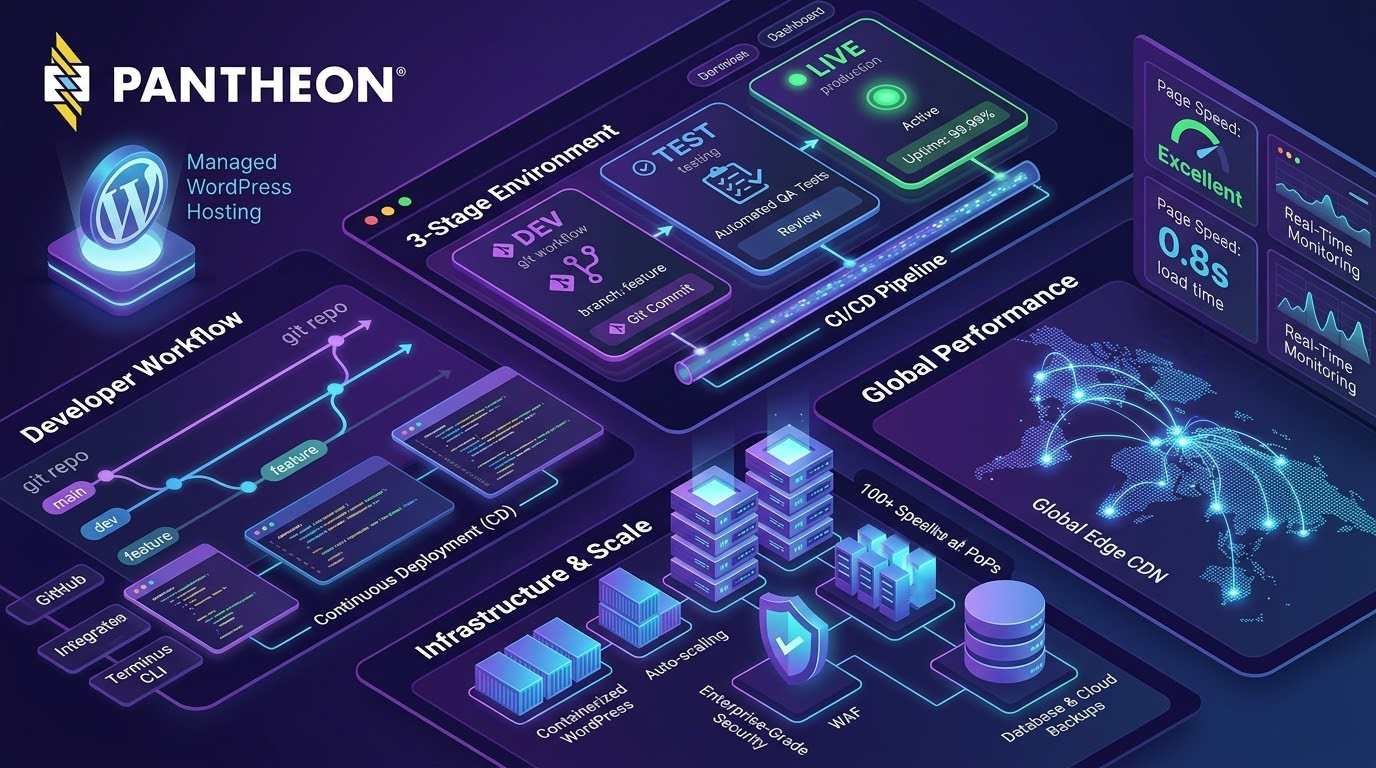
They run WordPress sites on their own infrastructure with significant optimizations. You get automatic backups, staging environments, development environments, Git integration, and deployment tools.
It is not just hosting. It is a complete workflow platform for WordPress development and management.
The Environments You Get
Most hosting gives you a website. Full stop. Pantheon gives you three: development, staging, and live.
You build and test in development without affecting your live site. You push to staging to test with real data. You push to live when everything works.
This sounds simple but it changes everything about how you work. No more testing on live. No more accidental deletions destroying your site. Separate environments mean you can break things safely.
The Git Integration That Matters
Pantheon is built around Git. Every push to your repository automatically deploys to your environment. Change code, push, and it is live instantly.
This is developer-friendly. If you know Git (and you should if you are doing WordPress development seriously), Pantheon feels natural.
If you do not know Git, Pantheon has a UI for everything too. But the power is there if you want it.
Performance: Where Pantheon Actually Delivers
Pantheon includes a CDN. Your site is served from data centers around the world. Images load from servers near your visitors. This is faster than cheap shared hosting.
They also include Redis caching and Memcached. Advanced caching that makes sites stupid fast.
PHP 8.2 by default. Modern database optimization. Regular performance audits and recommendations.
A basic site on Pantheon will load faster than the same site on cheap shared hosting. Period.
The Backup and Restore Reality
Pantheon backs up your site multiple times daily. Not weekly like cheap hosts. Not monthly. Daily backups you can restore instantly.
Your site gets hacked at 3 AM. You restore from a backup at 3:05 AM. Problem solved. Try that on a two-quid host.
When Pantheon Actually Makes Sense
You are an agency running dozens of client sites. Managing backups, updates, and performance across all of them would be a nightmare. Pantheon handles all of it.
You are a developer who values workflow. Git-based deployments, separate environments, automatic optimization. Pantheon lets you focus on code instead of infrastructure.
You are running high-traffic WordPress sites that need performance. Pantheon is built for this. You get performance optimization as part of the platform.
You need enterprise-grade security and compliance. Pantheon has DDoS protection, automated security scans, and compliance certifications.
You value managed WordPress hosting and do not want to worry about server management.
The Problem: Most WordPress Sites Do Not Need Pantheon
A small business website with two hundred visitors a month does not need forty quid a month hosting. At all. A basic WordPress installation on cheap shared hosting works perfectly fine.
Adding Git deployments, Redis caching, and CDNs does not make the site faster for two hundred visitors a month. It just adds complexity.
A blog running on Pantheon is like buying a Ferrari to drive to the corner shop. It works great, but you are vastly overpaying.
Pantheon vs Managed WordPress Hosting
WP Engine is a competitor. Similar price, similar features. Also expensive, also powerful.
Kinsta is another premium option. Maybe slightly faster, similar features, similar price.
Pressable is more affordable but still premium.
None of these are cheap. All of them are better than cheap hosting if you need what they offer.
The Real Cost of Pantheon
The plan starts at forty quid. Then you need a domain. That is a few quid. Then maybe an email provider because Pantheon does not include email.
Actually, Pantheon does not include CDN at the base price. That is an add-on. So add another few quid for the CDN you probably want.
By the time you have a functioning site with all the features you need, you are looking at fifty-five quid a month minimum.
Comparing to Budget Hosting
On Hostinger or Namecheap, you get a functioning WordPress site for three to five quid a month. You install WordPress on cPanel yourself, set up backups manually, and manage updates.
More work. Less reliable. But works fine for small sites.
On Pantheon, everything is handled. Updates are automatic. Backups are automatic. Performance is optimized automatically. You pay for the convenience and the features.
Performance Reality Check
Will your site actually load noticeably faster on Pantheon? Depends on your site. A well-optimized WordPress site on cheap hosting loads almost as fast as a default site on Pantheon.
But Pantheon makes optimization easier. And with high traffic, the performance difference becomes real.
The Developer Experience
If you develop WordPress professionally, Pantheon saves you time. No fiddling with cPanel. No manual deployments. No backup management. Just code, push, deploy.
That time savings is worth money. If Pantheon saves you five hours a month at fifty quid an hour, the hosting cost is paying for itself.
Security: Is It Worth The Extra Cost
Pantheon includes DDoS protection. Automatic security scanning. Compliance certifications. Regular security audits.
Cheap hosting does not have this. Your site is a target and you are on your own.
For a business site, Pantheon security is worth it. For a hobby blog, probably not.
The Update Situation
Pantheon pushes WordPress updates automatically. You do not have to worry about running old versions.
Cheap hosting does not do this. You have to remember to update WordPress, plugins, and themes. Easy to fall behind.
One outdated plugin is how most sites get hacked. Pantheon eliminates this problem.
Scalability Without Pain
Your site gets popular. Traffic spikes. On cheap hosting, your site slows to a crawl.
On Pantheon, it just works. The platform scales with you. You do not need to manually upgrade hosting plans.
Questions to Ask Before Signing Up
Do I really need all these features or am I paying for things I will not use?
Is my site complex enough to justify the cost?
Do I have the technical knowledge to use Git deployments or will I just use the UI anyway?
Can I afford forty-plus quid a month for the foreseeable future?
When Pantheon Is Overkill
Small business website. Hobby blog. Portfolio site. Side project. Local service business with minimal visitors.
All of these work fine on cheap hosting. Pantheon is wasted money in these situations.
When Pantheon Is Actually Worth It
WordPress agency running multiple client sites. High-traffic website. Professional WordPress developer. Business that depends on site uptime and performance. Complex WordPress setup with custom development.
The Comparison to DIY Infrastructure
You could rent a VPS from Linode or DigitalOcean for five to ten quid a month and set everything up yourself.
You get more control. You also get way more responsibility. Every update, every security patch, every backup is on you.
Pantheon handles all of that. You pay for the convenience.
Final Thoughts
Pantheon is expensive. It is not for everyone. It is for people and organizations who need what it offers and can afford it.
If you are a professional WordPress developer or agency, Pantheon is worth every penny. If you are running a small site as a side project, you are probably overpaying.
Do not sign up for Pantheon because it sounds impressive. Sign up because you actually need the features and the reliability.