The Promise of Cheap Minecraft Hosting
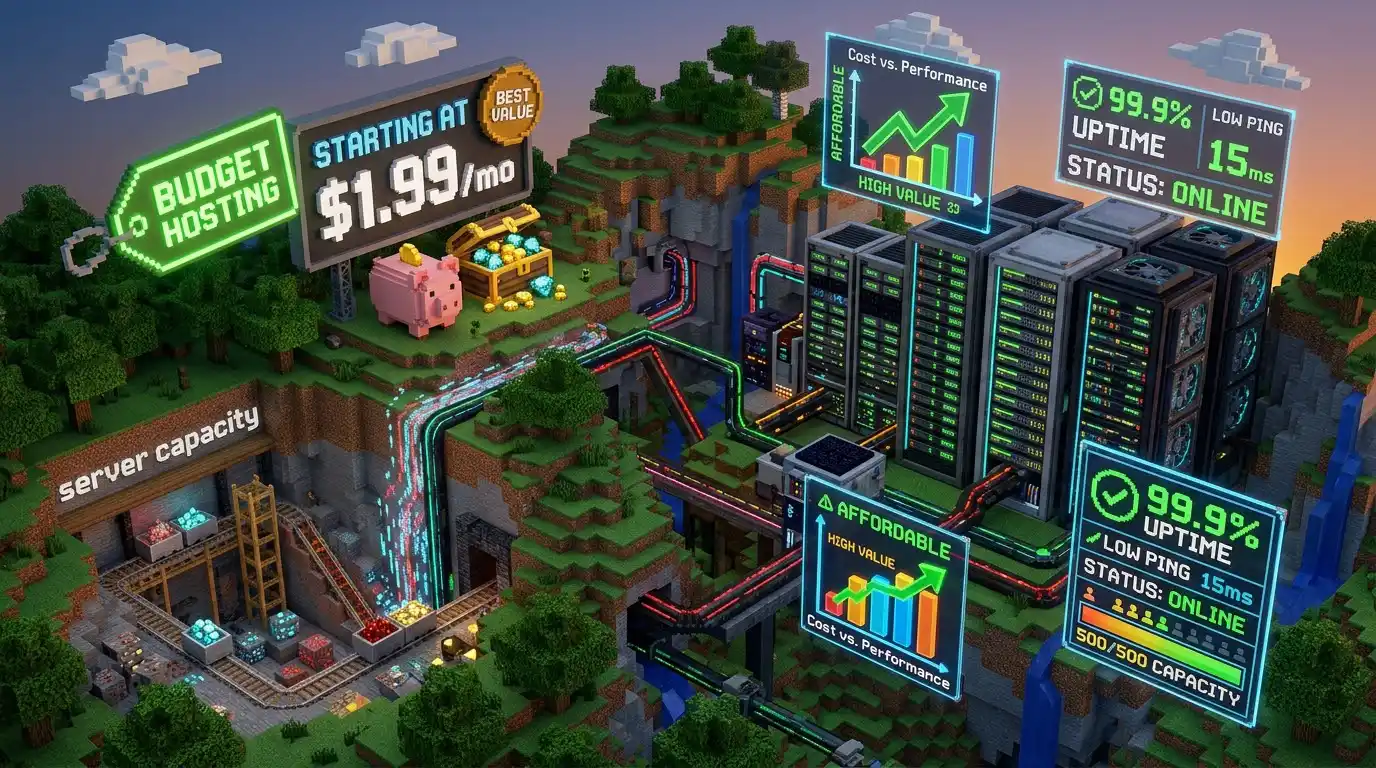
You see ads everywhere. One quid a month for unlimited players. Two quid for 64 players. Three quid for 128 players. Sounds amazing. Sounds impossible.
It kind of is.
Cheap Minecraft hosting exists and can work. But the word cheap here needs clarification. You are not getting the same experience as someone paying ten quid. You are getting a different experience entirely, and whether that works for you depends on what you actually need.
How Cheap Hosting Companies Make Money
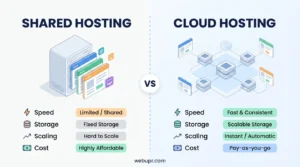
A company offers hosting at 50p a month. They are not making money from you. They are making money from running hundreds of people on the same server simultaneously.
Imagine a single physical server with enough CPU and RAM for maybe five dedicated 32-player servers. Instead, they put fifty customers on it, each paying 50p. That is twenty-five quid a month from one server. Multiply that across thousands of servers and suddenly the math works.
The problem is obvious: your server shares resources with forty-nine other servers. When any of them get busy, everyone suffers.
When Cheap Hosting Actually Works
Small survival servers with three to ten players? Cheap hosting is fine. You are playing with your mates, nobody is building massive farms or running crazy mods, and latency is acceptable.
Vanilla Minecraft with a handful of friends is not resource-intensive. Your cheap server will handle it without breaking a sweat.
Creative mode servers with a few players also work fine. Building is not CPU-intensive the way Redstone contraptions or mob farms are.
When Cheap Hosting Falls Apart
Thirty players on the server at once. Your server frame rate drops from 20 TPS (ticks per second) to 8 TPS. Everything feels sluggish. Mobs stop responding properly. Redstone contraptions break. Players quit.
Modded servers are worse. Mods are resource killers. A modpack with thirty mods running on cheap shared hosting? Do not even bother.
Large survival servers with player counts that spike are nightmares on cheap hosting. Ten players in the morning, fifty at night. You cannot oversell consistently at that point.
The Server Type Question
Paper and Spigot servers (optimized versions of Minecraft) are lighter than vanilla. If you are running Paper on cheap hosting, you might get acceptable performance. Vanilla Minecraft running on the same cheap hosting will be worse.
Check PaperMC for optimized server software if you are going cheap. It makes a real difference.
The Hidden Costs of Budget Hosting
One quid a month sounds great. Then you need a backup. That is extra. You need more player slots. That is a tier upgrade to two quid. You want world backups. Extra.
Suddenly that one-quid server is five quid a month because you kept hitting limitations and paying to upgrade.
What You Actually Get for Different Price Points
50p – 1 quid per month: Two to eight player slots. Shared server. No guarantees on performance. Works for casual play. Dies the moment you have players actually playing.
2-3 quid per month: 16 to 32 player slots. Still shared but slightly better hardware. Vanilla Minecraft works okay. Modded starts to struggle.
5-10 quid per month: Dedicated resources for your server. Better performance. Works well for survival servers. Modded starts working better.
15+ quid per month: Professional hosting. Dedicated CPU cores. You actually get what you think you are paying for.
The Hosting Companies That Actually Deliver Cheap
Aternos is genuinely free and works for small servers. You have to keep the server running every few hours or it restarts. Fine for casual play. Good for learning.
Nitrado offers cheap Minecraft hosting and is reliable. Not the cheapest but solid performance for the price. Usually three to five quid depending on size.
GTXGaming has competitive pricing and actual support. Similar price to Nitrado. Works well.
GameServers has budget options but they are more premium-focused. You get what you pay for in the better tier.
Apex Hosting is pricier but worth it if you want to actually enjoy the game. Not the cheapest but not expensive either.
The Comparison to Other Gaming Servers
If you compare pricing, check Palworld hosting and FiveM hosting costs. Minecraft is actually cheaper than most multiplayer games because it is less resource-intensive.
What Server Type Matters for Performance
Vanilla servers (untouched Minecraft) run on cheap hosting reasonably well because vanilla does not load custom content.
Bukkit and Spigot servers are lighter than vanilla. Paper is lighter still. The order goes: Vanilla (heaviest) > Spigot > Paper (lightest).
Forge servers (for mods) are much heavier. Modded hosting needs better specs.
Fabric is lighter than Forge. If you are running mods, Fabric is cheaper to host than Forge.
The Backup and Data Loss Risk
Cheap hosts often do not back up your world. If the server crashes badly, your world data is gone. You have been playing for three months and suddenly everything vanishes.
Ask your host explicitly: “Do you backup my world data daily? If my server crashes, can I restore from a backup?” If they cannot answer clearly, that is a red flag.
Backups cost extra at most cheap hosts. Budget for it.
Performance Expectations Reality Check
You expect 20 TPS (the speed Minecraft runs at). Cheap hosting might give you 12-18 TPS depending on how busy the shared server is. That is playable but noticeable.
When the shared server is under load, you might drop to 8-10 TPS. That is frustrating.
Chunkloading distance is often restricted on cheap hosting. You can render fewer chunks at once, making the world feel smaller.
Questions to Ask Before Renting Cheap
Is my server dedicated or shared? (Shared is cheap, dedicated is better.)
What Java version are you running? (Newer Java is faster.)
How many other servers are on my physical server? (Lower is better.)
What happens if my server runs out of RAM? (Does it crash or throttle?)
Can I install plugins and mods? (Some hosts restrict this.)
Do you automatically backup world data? (Essential.)
The Free Option
Aternos is free. It works. The catch is you have to keep it alive. The server goes offline after thirty minutes of inactivity. For casual play with friends, it is perfect.
Do not run a public server on Aternos. Do not expect performance. But for a few mates playing together, it is hard to beat free.
When to Upgrade From Cheap Hosting
Your server regularly hits player count limits. You upgrade to 5+ quid because the cheaper tiers are not enough space.
Your world is ten gigs and still growing. Cheap hosting often caps world size.
You are running mods and performance is terrible. Mods need better hardware.
You want backups and restoration capabilities. Cheap hosts usually charge extra or do not offer it.
Realistic Expectations
Cheap hosting is not a ripoff if you understand what you are getting. It is a completely different product than premium hosting. You are not getting 80% of the experience for 20% of the price. You are getting 30-40% of the experience for 10% of the price.
If that fits your needs, great. If it does not, paying more is worth it. Nothing is worse than a Minecraft server that lags constantly.
The Money Math
Two quid a month is twenty-four quid a year. If you play seriously, that server is probably going to be disappointing. Paying eight quid a month instead is ninety-six quid a year. For most people, that extra money is worth the actual playability.
Think of cheap hosting as a temporary solution or a testing ground. If the server takes off and people actually play, upgrade. Do not torture your players with lag to save a few quid.
Final Thoughts
Cheap Minecraft hosting works. It works well for what it is: a low-commitment, low-expectation way to run a small server. Do not expect it to perform like premium hosting. Do not expect it to handle hundreds of players. Expect it to work for a handful of friends playing vanilla Minecraft without demanding crazy performance.
If that is your situation, cheap hosting is legitimately fine. Go for it. If you need anything more, budget for better hosting.