
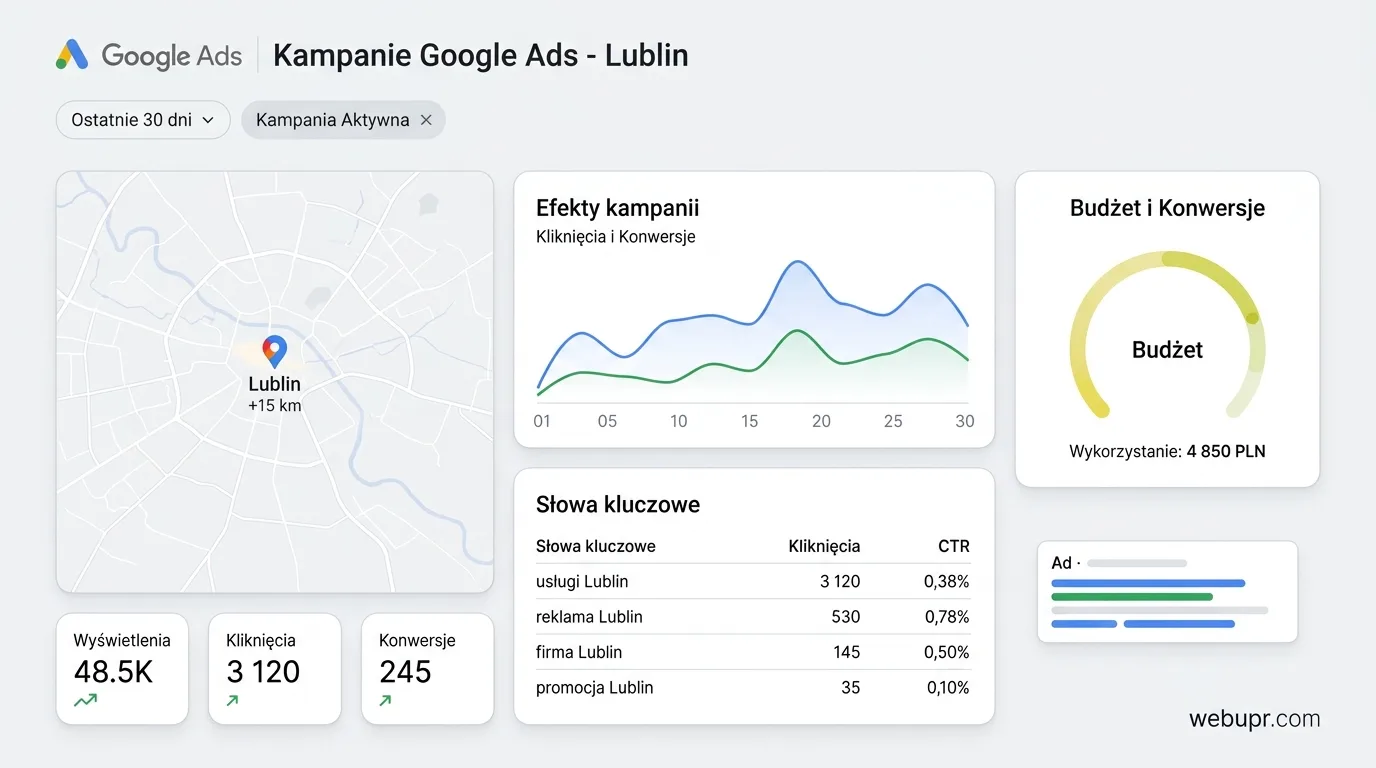
Lublin Is a Growing Market, and Google Ads Rewards Careful Planning
Lublin has a busy local economy. Service businesses, healthcare, education, retail, and professional firms all compete for people searching online. When your business is one of many on the results page, a Google Ads budget can disappear quickly if the campaign is not managed carefully.
Good management in Lublin is not about switching ads on and hoping for the best. It is about deciding who you want to reach, what they search for, what happens after they click, and how you tell whether the money is earning its keep. This guide walks through what to look for and what to ask before you hand your budget to anyone.
Start With a Clear Business Goal
Every campaign should begin with a goal. Do you want phone calls, form enquiries, online orders, bookings, or more visibility for one service in one part of the city? Each goal leads to different keywords, different ad copy, and different ways of measuring success.
A good manager asks about your goal before touching the account. One who jumps straight to keywords is guessing.
Keywords Should Match Real Buying Intent
Someone searching for a service in Lublin who is ready to contact a provider is in a very different position from someone researching general information. Strong campaigns focus on the first group and use negative keywords to block the second.
Review the search terms report regularly. It shows the real searches that triggered your ads. If irrelevant queries are eating your budget, add them as negatives so the spend goes to people who can become customers.
Language and Local Search Behaviour
Many people in Lublin search in Polish, while others may search in English, especially for specialist services. A campaign should reflect how your customers actually search. Test both where relevant, and check which terms bring in genuine enquiries rather than just clicks.
Ad copy and landing pages should use the same language as the search. A mismatch between the query and the page is one of the fastest ways to waste budget.
Structure the Account Carefully
A tidy account makes performance easier to read. Group keywords by service or theme, write ads that speak directly to each group, and send each group to a landing page that matches what the searcher wants.
A messy account with unrelated keywords in one ad group hides what is working. Clean structure is one of the quieter things that separates good management from average management.
Landing Pages Matter as Much as Ads
An ad can be excellent and still fail if the page it leads to is slow, confusing, or hard to use on a phone. The page should match the promise in the ad, load quickly, and make the next step obvious, such as a visible phone number, a short form, or a booking button.
When conversions are low, check the landing page before blaming the ad.
Bidding and Budget Decisions
Bidding should follow the data you have. A new account with little conversion history needs closer manual oversight. An established account with reliable tracking can use automated bidding with more confidence.
Budgets work best when they follow results. Pausing weak keywords and moving money toward strong ones is one of the most effective habits a good manager has.
Conversion Tracking Comes First
Without accurate conversion tracking, no campaign can be judged fairly. Before you spend heavily, confirm that form submissions, calls, and purchases are being recorded correctly. If you use Google Analytics 4, make sure your key events are set up and matched with your Google Ads conversions.
Our guide on importing custom conversions from Google Ads to GA4 walks through that setup step by step.
Reporting That Tells You Something
A useful report answers simple questions. How many leads or sales did the campaign produce? What did each one cost? Which keywords and ads drove them? What changed since last month, and what is planned next?
Be wary of reports full of impressions and clicks with no link to business results. Those numbers can look impressive while the phone stays quiet.
Questions to Ask Before You Hire a Lublin Manager
Ask how they price their work. A percentage of ad spend can reward higher budgets rather than better results, so look closely at what the fee is tied to. Ask whether you will have direct access to your account so you can see the campaigns yourself.
Ask how often they review the account, what they do with poor performers, and how they handle tracking. Ask for examples of how they improved results for similar businesses, and ask for references you can contact.
Local Knowledge Helps, but Skill Matters More
Knowing Lublin helps with service areas, seasonal demand, and local competitors. Still, local knowledge does not replace solid Google Ads skill. Test any manager on how they think about tracking, structure, and testing, not just on how well they know the city.
Related Guides
If you are comparing options in other cities, our articles on Google Ads agencies in Newcastle, Google Ads agencies in Birmingham, and Google Ads management in Kansas City cover similar questions about pricing, transparency, and testing.
A Simple Checklist Before You Start
Write down your main goal and what counts as a conversion. Confirm tracking works. Review your keywords and search terms. Check landing pages on a phone. Match ad language to how your customers search. Agree on a reporting schedule. Set a monthly budget you can sustain, and review it after the first few weeks.
The Bottom Line
Good Google Ads management in Lublin comes down to clear goals, careful keyword choices, tidy structure, strong landing pages, accurate tracking, and honest reporting. Choose a manager who asks about your business first, shows you the data willingly, and explains every decision in plain language.
To learn how Google Ads works and how campaigns are set up, visit the official Google Ads website.